

Since the launch of Oticon Zeal, early fittings across a range of clinics globally have highlighted several practical considerations that can help streamline appointments and optimise first-fit outcomes. These learnings reflect both the unique design of Zeal and the changing profile of clients presenting in clinic.
A new style calls for a different clinical approach
Oticon Zeal represents a distinct style within the portfolio, and early experiences show it benefits from a slightly different approach in clinic.
Interest in Zeal is often driven by online advertising and social media, with many clients arriving informed, motivated, and with a clear preference for this form factor. These clients also tend to be younger or new to amplification.
While it is important to acknowledge and validate this interest, the appointment should remain grounded in a thorough clinical assessment. Understanding what is driving the client’s preference—whether that be rechargeability, connectivity, or discreet design—can support more effective counselling. Where Zeal is not suitable, this insight also helps guide recommendations toward an appropriate alternative.

Managing expectations around physical candidacy
Internal data suggests that, on average, around two-thirds of clients can be successfully fit with Zeal using domes. However, as with any average, this will vary depending on the client cohort seen on a given day.
Post-launch experience highlights the importance of avoiding overpromising suitability early in the appointment. Introducing a quick physical fit assessment before making a style recommendation can help set expectations and reduce the risk of disappointment disrupting the consultation.
Begin by explaining to your client that, as part of selecting the most appropriate hearing aid for their needs, you will assess how well different devices fit in their ear. The following script can help guide this conversation:
“To help me recommend the best solution for you, I’m going to assess how a device fits in your ear. You don’t need to do anything.”

Physical fit and candidacy exist on a spectrum
A client’s suitability for Zeal is not determined by any single factor. Physical fit candidacy should be assessed on a spectrum, rather than as pass/fail criteria. There are five key factors to assess:
- Depth of fit
- Microphone position
- Antenna placement
- Discreetness
- Physical comfort
Rather than expecting all criteria to be “ideal,” it is more clinically useful to evaluate each on a continuum from poor →acceptable → good fit.
In practice, this means a fitting does not need to be perfect across all parameters to be successful. For example, a device may sit slightly less discreetly than intended, but if depth, microphone position, antenna performance, and comfort are all strong, the client may still achieve excellent outcomes and be highly satisfied.
Taking this balanced, spectrum-based approach supports more nuanced decision-making and helps avoid unnecessarily ruling out appropriate candidates.
Comfort considerations with deeper fittings
Zeal sits deeper in the ear canal than miniRITE devices, and this has important implications for comfort—particularly during first fit.
Even for experienced users of domes, reassessing dome size is essential, as a different size may be required to achieve optimal comfort and retention with Zeal.
When discomfort arises, targeted questioning can help identify the cause:
- Pressure within the canal may indicate the dome is too large → consider reducing size
- Contact with the bony portion of the canal may indicate the dome is too small → consider increasing size
If dome adjustments do not adequately resolve comfort concerns, a custom solution may be appropriate. OtoTherm moulds can be particularly useful in these cases—especially where deeper fitting is required. As a temperature-reactive material, OtoTherm remains firm at room temperature and softens in the ear, improving comfort, seal, and retention while enabling a smaller overall design. Silicone and acrylic options also remain available depending on clinical need.
Rechargeability
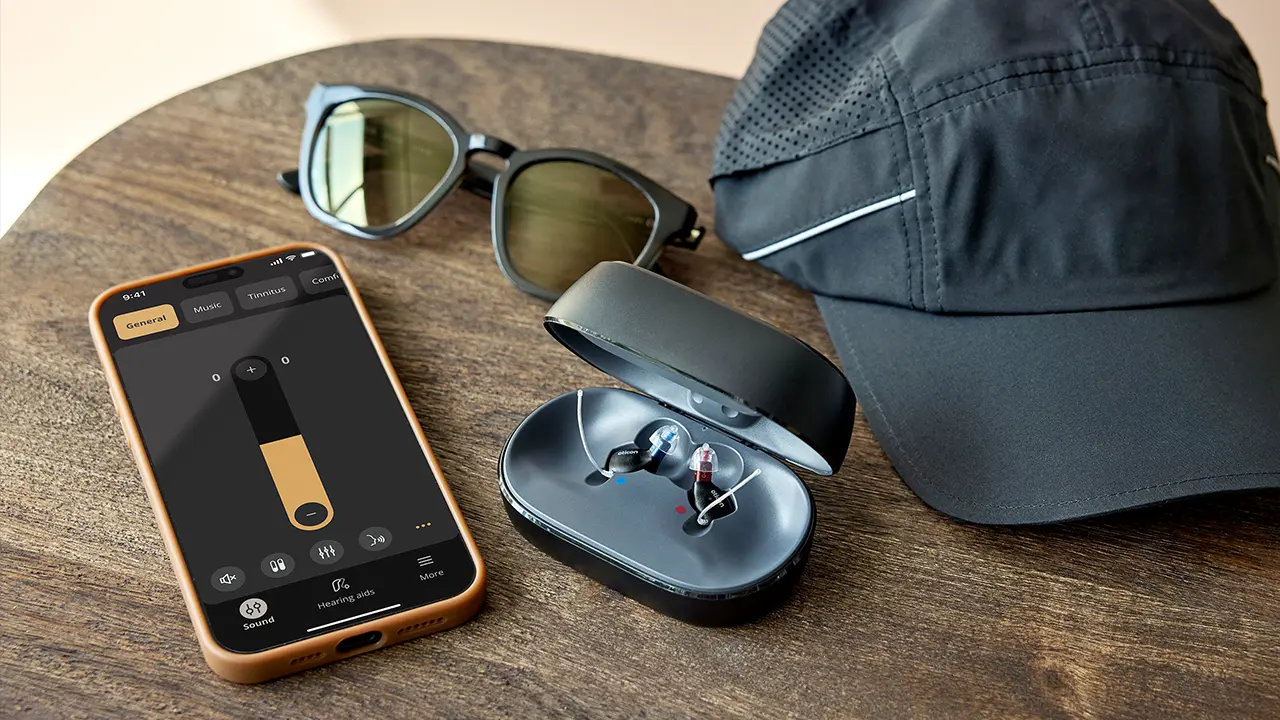
Zeal introduces Oticon’s first rechargeable in-the-ear style, using contact charging. Ensuring correct placement in the charger is essential for reliable performance.
When inserting the devices:
- The speaker should face the charger hinge
- The antenna should face the charger opening
- Red and blue indicators guide left/right placement
The hearing aid LEDs will illuminate when the devices are correctly positioned and charging.
Taking a moment to clearly demonstrate this process during fitting can help prevent avoidable follow-up queries and support a smooth at-home experience.
These early insights reinforce that successful Zeal fittings are supported by clear expectation setting, considered assessment of fit, and attention to comfort. Oticon Zeal has demonstrated reliability and flexibility in early clinical use. Applying these post‑launch insights can help audiologists achieve smoother fittings, reduce avoidable follow‑ups, and deliver a more confident first experience for wearers.